Tag Archives: positive parenting

parent and child, child not being heard or understood by the parent

Why being heard and understood is so important as a parent 

How parents can feel shut down and left without a voice

Being heard and understood is vitally important for parents.  Let us give you an example.  A parent on CosyChats shared her mother in law saying ‘well you wanted the child’ after she had told her how she was struggling with the new baby.  In that one simple sentence she wasn’t heard and she wasn’t understood.

Being heard as a parent .

The parent concerned felt unheard.  She’s shared how she was struggling and this was dismissed. She wasn’t heard, no empathy, comfort or assurance. Just dismissal.  I asked how this make her feel and she said very lonely. Like my emotions and feelings had no value.

Being understood as a parent

Clearly there was no understanding.  As far as the parents mother in law was concerned you have a baby and you deal with it.  It was your choice. ‘What else is there to it?’

Being heard and understood affects your life

Being heard and understood are fundamental human needs because they provide the psychological and biological safety required for health, connection, and self-identity. Experts increasingly emphasize that these experiences are not just “luxuries” but essential for long-term mental health and relational stability but we believe even more so for parents.

At Cosychats we believe parenting is the hardest job.  It can be incredibly complex, challenging and difficult.  The minute you feel on top of it something changes and your back to winging it. Being heard and understood is vital for parents. In the example we shared had the mother in law offered emotional support it would have gone so far.  Validating the emotion of feeling out of your depth (babies will do that to anyone) would have gone so far and in the words of the parent, at that point, meant the world, that i wasn’t alone or a failure as a mum.

The importance of being heard and understood can be categorized into four primary areas:

1. Psychological & Biological Safety

Nervous System Regulation: Feeling understood sends a signal to the brain that you are safe. This reduces stress hormones (like cortisol), steadies your heart rate, and makes emotional regulation easier.

Antidote to Isolation: Lack of understanding activates brain regions associated with negative affect and physical pain. Being heard acts as a safeguard against depression and the “quiet ache” of invisibility.

2. Confirmation of Identity

Self-Verification: Having others see you as you want to be seen confirms your sense of self and assures you that your identity is justified.

Validation of Worth: When someone listens without judgment, they give you “permission to exist” exactly as you are, which directly builds self-esteem and self-worth.

3. Strengthening Relationships

Emotional Intimacy: Understanding is the “glue” of intimacy. It allows people to connect beyond roles and surface-level interactions.

Conflict Resolution: When people feel heard, they are less defensive and more willing to compromise. In mediation and difficult conversations, feeling understood is often the prerequisite for reaching an agreement.

Relationship Resilience: Feeling understood leads to “relationship identification,” where you see the relationship as a central part of who you are, making you more likely to protect it and forgive minor transgressions.

4. Personal & Professional Growth

Mental Clarity: Expressing your thoughts to a listener who “gets it” helps you process complex emotions and gain fresh insights that you might not have reached alone.

Workplace Belonging: In 2026, workplace trends prioritize “creating space for voices” to foster high-quality connections, as employees who feel heard are more productive and committed.

Life experience of not being heard and understood can have a dramatic impact on your life and your welfare.

The really sad thing is that it would have taken much for the mother in law in our real life to have dramatically changed  the outcome. Feeling understood validates identity, fosters belonging, and strengthens relationships for overall well-being.

At CosyChats we understand and believe in listening and understanding. Providing a clam space that parents can feel safe in.  Not judging but helping and supporting as best we can.  It sounds quite simple but it can have a huge impact on someone.  Just demonstrating i’m listening and i understand, I’ve walked in your shoes. Your emotions are valid.

How the traditional village to raise a child may have changed.

Parents often feel more isolated because they probably are. Generational and technological changes have an impact but there are other factors that makes parenting more difficult and isolating.

1. Breakdown of the “Village”


  • Geographic Distance: Modern families often live far from extended relatives, losing the “built-in” help of grandparents or aunties who traditionally shared the workload.

  • Individualistic Culture: In many Western societies, the responsibility of child-rearing has shifted from a communal effort to a solo or two-person job, creating an unnatural burden.
<
2. Economic and Structural Barriers.


  • Cost of Living: For 48% of parents, financial strain is a primary driver of isolation. High costs prevent them from attending social groups, paid classes, or even finding the time to connect with others.

  • The “Double Burden”: Parents—particularly mothers—are often expected to work like they don’t have children and parent like they don’t have a job, leading to extreme emotional fatigue and lack of time for self-care. 


3. Digital and Social Pressure

  • The Comparison Trap: While social media connects parents, it also creates a “perfect parenting” myth. Seeing curated, “Instagram-ready” lives can lead to feelings of inadequacy, shame, and a desire to hide one’s own struggles.

  • Technoference: Excessive screen use can interfere with face-to-face adult connections and even disrupt the quality of parent-child interactions, making parents feel lonely even while physically with their children.


4. Identity Shifts and Stigma

  • Loss of Previous Self: Many parents feel a “seismic shift” in identity, where their sense of self is consumed by duties, making them feel alienated from old friends and past lives.

  • Fear of Judgment: Parents may avoid sharing their struggles for fear of being viewed as “bad parents” or “unfit,” especially in toxic social circles. 


Conclusions – Why being heard and understood are so important

The science backs this up.  As an individual this is important but as a parent even more so.  Having responsibility for another person carries great weight.  Weight many people struggle to carry.

Struggling being a parent is not something we should ignore or dismiss.  Its real and happens to so many people.  Parenting is hard but parenting without a voice or being understood is made so much harder.

Its simple and until you’ve experienced t you may not understand how damaging it can be.

As CosyChats we are committed to listening and sharing knowledge and experience.  We believe lived experience brings understanding and emotional support.  No parent has to feel alone, without a voice and misunderstood.  CosyChats is here.

CosyChats is a personalised parent support Service.

What is Cosychats.com and what does Cosychats do?

Introducing CosyChats

🛟1-2-1 Personalised Parent Support Sessions

🧷 Safe Spaces Free From Judgement and Shame

👍🏼Where No Problem Is Too Big and No Question To Small

👩‍��Offering Compassion and Understanding

🆘From Real Parents Who Know How Difficult Being a Parent Can Be

🧑‍🤝‍🧑Real Lived Knowledge & Experience

💻Virtual Sessions Where You Are In Control

Top 10 Benefits of the CosyChats service.

👍🏼Access to a wealth of Parenting Experience and Knowledge.

👍🏼Your own personalised 1-2-1 service.

👍🏼A safe space free from judgement and shame.

👍🏼You are in control and choose the CosyChats parent and service that’s right for you.

👍🏼Years of lessons learnt and experience gained that can all be shared.

👍🏼Being understood and your needs heard.

👍🏼No question is too small, no problem too big.

👍🏼Compassion and support from people who understand how difficult being a parent can be.

👍🏼Its affordable and is far greater value than professional providers.

👍🏼Meetings are on online so you can join from where you feel most comfortable.

Thank you for reading ‘Why being heard and understood is so important as a parent ‘

Being a parent can be challenging. This is one of the reasons we set up CosyChats. CosyChats hosts experienced parents who can share their experience and knowledge by provide support and help to other parents. Seeking the help and support of someone who has walked in your shoes is absolutely the right thing to do.

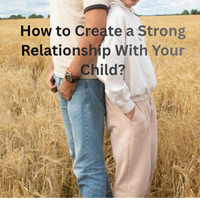
How to Create a Strong Relationship With Your Children

Introduction:

Creating a strong relationship that will last for life with your kids. Every parent worries constantly about their children – usually before they are even born.

We worry about them being safe and how they will thrive in a changing and challenging world.

How to create a strong relationship with your child


Every parent wants the absolute best for their children and for them to mature into resilient, independent adults.

At CosyChats.com we support personalised parental support and parent mentoring. CosyChats.com offers a parenting safe space free from judgement and shame where no question is too small and not issue to big.

A powerful technique towards this is nurturing an open and sharing relationship with your child where they feel they can approach you to tell you anything – without feeling fear, guilt, or shame – only hearing your guidance.

Is a strong bond natural?

Parents often think they will always have a strong bond with their children and we hope you do but not all families have this. Relationships break down especially as children grow and become teenagers. Cosychats hosts a parenting community that can offer help and support to you and by sharing their experience on how they maintained a healthy, effective and loving relationship with their child. There is no shame or judgement as we know how easy strong bonds with your children can be tested. How isolating and distant teenagers can be.

As the milestones of my son growing up fast came and went by, I feel fortunate that he has come to me when he has needed help, advice or just to vent how he felt. I felt we had a strong relationship and that we could discuss most things openly. 

Help for parents

At first it would be just him telling me about his day at the end of school, but then it became about his friendships and what he wanted from his life.

When we moved house we talked about him being happier and preferring being somewhere rural and meeting new people.

And then, unfortunately there are the less happy things such as the peer pressure and judgement of the teenage years, the pitfalls of dating and when education pressures start to weigh heavy.

I feel very fortunate to have this safe space in my small family for him to share with us but I don’t think it was just by accident. 

My honest hope is that by using some  of the ideas and tools in this blog, anyone can build openness, trust and grow the confidence in their children to share their thoughts and feelings so important in future adulthood. Building a strong relationship was important for me, i wanted my son to trust me and be able to speak to me. 


Why being an Approachable and Open Parent helps build a Strong Relationship with  your Children 

If Work getting in the way of your family read our blog  What Happens When WORK Disrupts Time With Your Kids?

Do you remember times when you felt your feelings just didn’t matter?

That time at work in a meeting when your boss ignores your opinion completely?

The girlfriend that just tells you your opinion is wrong without even listening?.

Maybe as a child when you were upset and a parent just told you to not make such a fuss..

Now do you remember the times you felt that your feelings and opinion did matter?

When someone took the time not to just listen – but to understand your viewpoint.

How they tried to change things for you you felt something was unfair

When they didn’t just dismiss you and tell you to get on with it

If you remember the difference, you will understand why it’s important for a parent to have a an open sharing relationship with their child. 

If you have been treated like this you will have empathy for:

Feeling anger because your feelings didn’t matter.

Feeling shame for feeling this way to start with.

And insecurity because your feelings were rarely valued.

Knowing these things we should focus on the strong relationship we are building with our children.

It’s important to remember that in childhood we learn about the world, and how to process our emotions. The sort of relationships you form with other people.

When a child grows up without the security and comfort of having a safe space they can end up emotionally distant, insecure or  scared of commitment.

Without a sense of safety, risky behaviour is more likely, because they have never felt safe.

If they aren’t successful in approaching people and expressing themselves they can end up with lower confidence, making adult life harder – the opposite of what we really wanted for our children.

The Benefits of Being an Open Door Parent to build a Strong Relationship with your child 

A great way of imagining what an open parent child relationship looks like is an open door.

Your child should feel comfortable sharing anything with you but this requires trust, communication, and a supportive environment.

The door is a great analogy because it works on so many levels.

Being an open door means that you are mostly always available, but it also means that you don’t ever force or expect that conversation. You can show them that the door is open, but they have to choose if they want to share, and when. Celebrate their honesty, as the foundation to an open and trusting relationship.

It also means they are free to leave, they only have to say what they want to and can leave at will. There are ways, however of encouraging your child to share, and practical tips on how to have these conversations when they do

How to Build a Strong relationship with Your child.

How to really listen to your child – pitfalls parents fall into that create distrust 

When your child chooses to start this conversation, be fully present as much as possible.

There are times of course, like when life is hectic or possibly you are driving, when it’s harder to do this. You can always agree to finish talking about it later.

During your talk, put everything else aside, put the phone down and give it your full attention.

Make them know you are listening by reflecting (asking questions or making statements to how you are listening) what they say to you as this also makes them feel validated. Make them feel seen and understood. When they do talk, be transparent and honest in your dialogue – building credibility and growing trust. 

Asking open ended questions also stops the conversation shutting down.

Your child may also communicate better in different ways. A text or note might work better than face to face, talking during an activity might open things up.

If we try to take an interest in their world and what is important to them, they may also feel more comfortable in coming forward to you. 

Why Really Listening to Your Child is so important

Its really important your child feels heard and knows that you as their parent will listen.  Most parents will say they listen to their children but do we really listen?  I think the biggest culprit is ‘distracted listening’. Listening to your child but being engaged on something else, usually your phone. Give your children attention.  Make them feel their feelings matter and you care.  Most parents do care and want to hear their children but often parents give the impression of being distracted.

Give Support to your Child not Judgement

As a parent is try to show empathy wherever possible and ask open-ended questions. Children are more likely to talk if you listen without judgement or criticism. A technique for this is to say ‘I’ instead of ‘you’ statements, taking the focus off them. Also encourage them to talk by praising their honesty. Use words that support and show your love, not criticism or minimising the problem.

It’s also important to stay calm if the conversation gets tough or touches on taboo subjects – it’s important they feel safe coming to you in the future.

You can  show your support by brainstorming and working on problem solving solutions together – as a team.

Be mindful that building a strong relationship with your child takes time and the relationship will be tested.  Being a parent means considering the long term relationship and not reacting or worse over reacting to the extent your child child not fears being able to tell you things.

How to spend quality time with your child and still be a parent. 

Quality time with your child is a given for a great relationship with your child.

It’s also a great way to encourage them to be open with you. By choosing activities they enjoy, they will be relaxed and more inclined to talk.

Find rituals that stick, a chat at bedtime or the school run and family dinners eaten together.

Personally I would take my son on a bike ride, or a hot chocolate as a treat on Fridays.

Experiment what works for you and your child don’t force it just find something you can enjoy with a treat ideally.  The hot chocolate is our father son thing, something we enjoy together and strengthens the bond between us.

If you do this regularly enough you can also check in, asking them how they are doing.

Start this good parenting habit early so it becomes their normal. Try to keep your promises to be there – but don’t expect that they will automatically open up to you. Be patient especially with teens. You build a strong parent child relationship but it will change and you will have to adapt your parenting style. Things change for teenagers and what was cool pre-teens may not be anymore, including you.  

Balance a child’s right to privacy with parental responsibility.

Another facet of keeping your parent child bond connected is to respect your child’s privacy. If they feel you are intruding they are less likely to be open with you or share problems in the future.

Balancing your child’s right to privacy and your role as a parent can be difficult at times.  If your child is at risk then you may reasonably decide their privacy is a secondary concern.

My advice would be if you can look into their life without them knowing then consider it.  Checking phones is a big one.  If you can check it without them knowing then this maybe a good solution.  You need to be prepared to defend and explain your right as a parent to delve into your child’s personal life though.

It maybe better to be up front and ask your child more personal questions but this may just shut them down and highlight your interest.  Its not ideal but sometimes being a parent involves being sneaky.

Ultimately your parental responsibility is to keep your children safe and free from harm.  The wishes of your child are out weighted by the right of you as a parent to them i think.  If you explain why you breached their privacy your child may not like it but hopefully they’ll understand why you did it as their parent, because you love and care for them.  Sometimes listening takes a back seat as a parent and you need more direct action to help and support your children.

Modelling good parent behaviour and sharing vulnerability 

Maybe in the past you have heard other parents say,”Do as I say, not as I do”. 

Hopefully this is just a way of saying that as parents we know we are not perfect.

This aside though, a very powerful way of encouraging your child to be open and share with you- is to do this yourself. Don’t be afraid to open up your life before you were a parent to your child. 

How to create a strong relationship with your child

Whether during a period when they are beginning to open up to you, or just in general. They can only feel more comfortable to talk when you nurture an environment of openness and  trust. Sharing the times you went through similar problems, and how you personally overcome them. Builds trust and will bring you together.


For me personally – not hiding my own problems from my son- mental or physical brought another affect that I did not even expect. 

Being open, being honest, takes away the pressure of hiding it from your child. From pretending that everything is fine. This is a weight off your shoulders that nobody including parents needs to carry.

Sometimes what your child might say could even surprise you in how useful it is to your problem. Our children should not be our therapists, but they see the world in a much more open and simple way.

You may be surprised how helpful and understanding your children can be to your needs and see you as more than a parent who tells them what to do and a human who has their own frailties.


How guidance and not punishment can help you form a better relationship with your child


Focus on what you as a parent wanted to achieve with your child.

Creating a parent child safe space will bring benefits to both of you, and strengthen your relationship for a lifetime.

Although there are times when there will need to be punishment for your child, the occasions where they have shared something difficult might not be one of these times.

This doesn’t mean there can’t be consequences for your child, but by focusing on the guidance, and explaining how it’s different from punishment – the outcomes will hopefully be more positive and your child will still want to share with you in the future.

By removing fear and retribution, and by using problem solving and discussion then you can have healthier consequences and not just punishments without any subsequent change.

Being a parent means you have to think of the war and not just the battles but also battles aren’t really battles, they are opportunities to provide guidance to your child.


Conclusion

Building an open, sharing relationship with your child doesn’t happen overnight.

It needs a lot of patience and experimenting to find out what works.

But it is worthwhile. The bond of trust and dependability will build resilience, trust and a relationship that will last a lifetime. 

Even if you feel you don’t have this quite yet, it’s never too late to start.

Start small by introducing ritual quality time with your child with regular check-ins. Tell them you are always available for them, be patient and practice active listening.

Be open to sharing feelings and thoughts in both directions with your child to grow their  trust.

If you wish to discuss this further or get help with any other parenting issues. Feel free to contact me on CosyChats.

CosyChats.com hosts experienced parent who can provide Personalised Parent Support including how to create a strong relationship with your children.

CosyChats supports personalised parent support. CosyChats offers a parenting safe space free from judgement and shame where no question is too small and not issue to big.
Why Parents Should use the CosyChats parent support service.

🛟1-2-1 Personalised Parent Support Sessions


🧷Safe Parent Support Spaces Free From Judgement and Shame

👍🏼Where No Parenting Problem Is Too Big and No Parenting Question Too Small

👩‍👦Parents Supporting Parents Offering Compassion and Understanding

🆘Practical Parenting Support Created by UK Parents

🧑🏼‍🦱Parent Mentoring from Parents with Real Lived Parenting Knowledge & Experience

💻Online Parenting Support from the comfort of your own home.

Top 10 Benefits of the CosyChats parent support service.

👍🏼Access to a wealth of Parenting Experience and Knowledge.

👍🏼A Personal Parenting Mentor for you

👍🏼Parent support via phone, Text or On-Line.

👍🏼Parent Support Groups for key development stages

👍🏼Flexible parenting support sessions.

👍🏼Online parenting support at a reasonable cost.

👍🏼Parent support sessions can be gifted to a parent who needs parental support.

👍🏼Parent to parent support group harness wide parenting experience.

👍🏼Parenting support services are booked in 10 minute slots.

👍🏼Parenting support from real parents who want to help.

Thank you for reading the blog  (how-to-create-a-strong-relationship-with-your-children). Understanding how creating a strong bond with your child is beneficial. Can change the way you think about parenting your child.

A scared parent being threatened by a violent child and needing parenting support

Being hit and beaten by your children – Support for Parents

Domestic violence was never part of your family. Your family home used to be a place of love, playful laughter and happiness.

Now it’s a place of fear, raised voices and you dread being hurt by your own children.

What do we mean by hitting and domestic violence?

Domestic violence sounds harsh and serious words.  Sometimes parents will say they just hits me when he or she is angry. We used the term (domestic) violence in this blog because that’s what it is and its important to recognise violence and violent behaviour and not apologise or cover it up.
Support for parents of teenagers


How did violence become a routine part of your life?

As a parent the moment your newborn child is placed in your arms you feel their vulnerability. In their tiny size you feel they are dependent on you in every moment, and you know that from now on, you will do whatever it takes to protect them.

Inevitably your relationship with your child becomes different at each stage of their life and eventually you will have conflict with your child.

Of course this is normal, especially during the teenage stage, but what happens when it goes from raised voices and slammed doors to pushing, shoving, bruises or worse, Violence against you? Violent children.

When you are faced with domestic violence and the only thing you want is the best outcome for your children it can be hard not to be paralysed by fear and shame. Who would want to admit they are scared of their own child? Who would want to admit their child uses violence against them? 

If you ignore it maybe it just gets even more frequent, violent and maybe they start to do it to someone else.

Try to resist it, maybe you or they get hurt.

If you argue with them, maybe they get more angry and use more violence. Can you reason with violent children.

Help for parents


And maybe, reporting it and asking for help labels them as a criminal, and does more harm than good.

All you wanted to do was love them to make them happy but it’s starting to feel like they hate you and everyone is miserable. Violent children need help but how do you provide that help

All you hoped was to keep them safe but now they are just hurting you – mentally, emotionally and even physically.

The parent support dilemma of violent children. 

What to do when your child uses violence against you. 

Statistics are rare on violent children whee children use aggression against their parents but it is known that forty percent of parents do not report it before it becomes more serious. Domestic violence goes un-reported every day. 

Sometimes we can hope it will pass or improve on its own, maybe we feel guilty or ashamed to admit to it and face judgement. You don’t want to be seen as that bad parent after coming so far.

But It’s vital that if you feel you, your family or your child are in danger from aggression or violent children that you seek help, immediately if you need it.

Violence from anyone should not be tolerated including violent children, even if they are your own children. 

Parents frequently don’t report what they are going through or seek help and there can be many reasons for this.  We know parents who are routinely living with violence from their children. Parents who live with the violence because they just don’t know what to do and are ashamed and afraid to ask for help.  

The motives don’t have to be as extreme as the fear of a criminal record for your child or the extreme fear they could be taken away.

There may-be a fear that confronting the problem will make your child angrier or use more violence towards you.

Often it’s as simple as not wanting to taint the relationship with your child for life, the hope is the violence will just resolve itself with the passing time or the fear of judgement from other parents, friends and family members.

As parents we strive to be the best we can be, it’s very hard to put up your hand and admit you are struggling. You might feel so guilty, or become so deeply immersed into denial about how bad things have become – that you are paralysed into inaction.

Admitting your child is using violence against you is often too big an issue to share.

Easier the parent thinks, to put up with it.

Often the best way to help your child is to recognise that you need help, and to realise you aren’t helping them or yourself if you become hurt. Violent children need help

Occasionally an abused parent may hesitate because they worry they won’t be taken seriously, or that there will be no useful help.

Parent Support – Your child becoming violent does not mean you are a bad parent.

Take some reassurance that the problem is way more common in families than may realise, and this does not make you a bad parent.

Violence against parents is reported in at least 3 percent of UK homes, but the figure is probably much higher due to historically low reporting.

Parental abuse happens to people from all walks of life and in many varied circumstances.

Whatever you do as a parent don’t suffer in silence or accept your child’s violence against you. 

There is always hope – with many things that you can do as a parent, and if applied well hopefully we can avoid things getting any more serious.

Another consideration is that parental abuse is frequently varied, complicated and may evolve. There may not be violence in the beginning. Most children aren’t born violent.

It can start with raised voices but may become emotional, coercive, include damaging property, financial, online or other controlling types of abuse – as well as sadly involving violence. 

It might also start with one form and mutate into one or more of the others.
v

Parents maybe be accepting of poor behaviour and sometimes blame themselves for not tackling the behaviour sooner not realising or accepting it is not their fault, and they are not to blame.

The reasons why children use violence and what to do when your child becomes violent. 

Trying to solve the problem of child aggression is like navigating roads without a map, or building furniture without the instructions.

As well as there being multiple reasons why it could be happening, it could also be many of them simultaneously. Being aware of these possible reasons however can only make the issues more relatable and cultivate higher levels of empathy.

Developmental and emotional factors

Teenagers are famous for their moodiness. It’s a period of life full of hormones with a growing struggle for independence. Additionally during this period a teenage brain is still developing (especially the prefrontal cortex) so they may act before they think.

Rules, limits and authority can all be reacted against explosively and unpredictably.

Family and relationship dynamics

Circumstances at home, or with the most important people in their lives, can be another factor in childhood aggression. Changing dynamics, such as family breakdown, arguments and conflict, especially with the child feeling ignored or emotionally unsupported, can also trigger conflict and violence.

When there are arguments between adults within a family home, sadly it can become normalised for children and so they may mirror this behaviour at home.

Finally, as much as teenagers love to argue – they actually need structure and boundaries. Inconsistency often just leads to more power struggles.

External pressures

Teenagers, and young people have never had quite so many pressures as nowadays.

Academic stress, social media or peer pressures, cost of living worries and all the usual difficulties that come with becoming an adult – all add to stress and may lead to outbursts of anger and aggression.

Mental health struggles

It’s not always the case that children show they are struggling with their mental health by being withdrawn or tearful. Depression, anxiety, ADHD, or trauma can sometimes show up as irritability and aggression. 

Even if your child is not suffering with mental illness then low self esteem or insecurity can also drive their behaviour.

The outbursts are the warning signs that these problems need addressing.

Useful Techniques

Although you may feel alone and helpless in the moment there are definitely things you can do to hopefully diffuse the situation. Some techniques might work better than others and results might be different day by day.

Safe Space

During incidents move both physically and conversationally away from your child.

Give them the room to vent their emotions and gradually calm down.

Being closer can just be intimidating for both of you and if things do escalate you are within physical reach.

If your child uses violence then have a plan and be near to an exit, while also trying to keep them away from things that can be damaged or things they may do damage with. 

Remove objects that can be harmful.

Safe words

If we can diffuse an incident with space then often we can also with the words we choose.

How do you feel when you are upset about something and the person dismisses you, minimises your feelings or just ignores what you have to say?

Often this just makes us feel worse, if not more angry.

Your child does not have to be factually right for you to listen attentively and acknowledge what they are saying to you.

It is then a learned skill to decide if to tell them politely how you disagree, to let things slowly fade away, or to gently change the subject. Only understanding the situation will let you judge which approach is best.


The calm after the storm

Arguments aren’t solved in the heat of the moment, and that’s why it’s always best to wait

Personally, I have had several disagreements with my son when the best thing to do was actually nothing.

Sometimes he would just be over-tired or stressed about something and all that arguing about it would do – is make it more strained.

Waiting hours or even sleeping on it and waiting for the next day invites true calm and lets emotions regulate. Jumping straight into a lecture is rarely productive.

This also gives you the space to think about the words you pick and to carefully pose your body language as one of the hardest parts in diffusing arguments is to not restart the argument or accidentally say something that makes it actually even worse.

Try to use I statements instead of you statements. For example;

“I felt scared when you shouted at me”, 

not blaming – “ You’re always so violent”.

Reflection

Follow this up by asking them to reflect on how they felt as it was happening but explain that their actions were unacceptable and where the boundaries should be.

Hopefully in explaining why they felt so emotional, the root causes, if any, will be revealed. Listen very carefully without jumping to judgement.

Listen carefully to what they have to say to you, carefully not dismissing or patronising them.

If you dismiss them out of hand and don’t actually discuss how they feel or their opinions they will just feel ignored, dismissed or worse, treated as a child – increasing anger and resentment.

Furthermore if you don’t debate their opinions or feelings, how can they ever alter?

Together you can then move forward and respectfully solve these issues together.

Finally, try to pivot into doing something more fun together.

The easy way to think of correcting this aggressive behaviours is:

“Calm first, connect second, correct third.”

If parents jump to punishment too quickly, the teen may shut down or become defensive. But if parents avoid addressing it at all, the aggression can escalate. Balance is key.

Documenting

Writing down the details of incidents, what happened before, and what worked can be a great idea.

It can also be a way for you to realise how serious the problem is, and if it’s getting worse.

Looking outwards.

Share your feelings. Have an outlet to share your emotions and for someone else to be objective. Parents often don’t want to admit behaviours and violence is getting worse. 

This can give you the breathing room to cope, and a new perspective.

Of course this also applies equally to your child, they too many benefit from talking about it to friends, a different relative, support group, or a professional as part of therapy.

It’s also important to look after yourself, emotionally, physically and mentally.

Take time out to relax and shift focus from the issue.

Parent Support – When should you contact the Police?

What can the Police do.?

Cosychats offers a parenting support service that draws upon the experience of other parents.  A parent mentorship to help and support other parents but our service is remote and on-line. We are not with you. We don’t live your life but we know as parents sometimes you need to put yourself first to support your child.  If your child is becoming violent they need help.  Contacting the police can provide that help.

Parents are often reluctant to involve the police for fear of retribution and demonising/criminalising the child. As a parent support group our advice would be to talk to the police, share your concerns and see how the police can help you and your child.

If you are in danger or fearful do not hesitate to contact the police.

Conclusion

Parenting Support – Don’t Suffer in silence, there is always help and people who can help.

Sadly, aggression from children towards their parents is not rare, and a lot of it goes hidden.

It does not make you a failure as a parent  and it happens to all sorts of families from every background.

There are things you can do to work on the problem, but seeking help is a sign of strength not weakness.

If you ever feel in danger it is very important to get help, even if this means contacting the police. Don’t assume that this will always result in the worst outcome for your family. They are there to help.

Doing this is how you protect you and your family and stop things getting worse.

If you want to talk about this or any other parenting issues, feel free to contact CosyChats.

CosyChats is a Parent Support Service for Parents.

We support personalised parent support. CosyChats offers a parenting safe space free from judgement and shame where no question is too small and not issue to big.

Why Parents Should use the CosyChats parent support service.

🛟1-2-1 Personalised Parent Support Sessions

🧷Safe Parent Support Spaces Free From Judgement and Shame

👍🏼Where No Parenting Problem Is Too Big and No Parenting Question Too Small

👩‍👦Parents Supporting Parents Offering Compassion and Understanding

🆘Practical Parenting Support Created by UK Parents

🧑🏼‍🦱Parent Mentoring from Parents with Real Lived Parenting Knowledge & Experience

💻Online Parenting Support from the comfort of your own home.

Top 10 Benefits of the CosyChats parent support service.

👍🏼Access to a wealth of Parenting Experience and Knowledge.

👍🏼A Personal Parenting Mentor for you

👍🏼Parent support via phone, Text or On-Line.

👍🏼Parent Support Groups for key development stages

👍🏼Flexible parenting support sessions.

👍🏼Online parenting support at a reasonable cost.

👍🏼Parent support sessions can be gifted to a parent who needs parental support.

👍🏼Parent to parent support group harness wide parenting experience.

👍🏼Parenting support services are booked in 10 minute slots.

👍🏼Parenting support from real parents who want to help.

Call to action. – Parents supporting parents.

If you hear or see violence see how you can help.
Its far too easy to think everything must be ok, the parent has it all under control but if you have concerns don’t leave them.  Follow up up your concerns.  Offer help and parenting support.  Were all parents and parenting is hard enough. Sometimes we need support but don’t ask for it.


If you see someone who needs help. Help them.  That maybe a simple acknowledgement of i’m here if you need me to more practical or direct help but parenting support and help can be so beneficial.

Being parents isn’t easy and there are more and more traps and pitfalls to fall into.  That’s why we set up CosyChats com to help support and guide parents.

CosyChats is a personalised parent support Service that can provide support to parents across a wide range of parenting issues including how to educate your children and give them the best and most effective life skills.

If you need help being a parent.  Raising happy and well rounded children. We’re here for you offering practical and emotional support.  Parenting knowledge and experience, all in a judgment free space.

More Parent Support From CosyChats

The Loneliness of Being a Parent That Nobody Tells You About

Why Do We FIGHT So Much NOW That We Have KIDS?

Is PHONE ADDICTION Ruining Your Family Bonding?

Thank you for reading this blog (Parenting support for parents who are hit by their kids).

CosyChats is a personalised parent support Service that can provide support to parents across a wide range of parenting issues including how to connect with your children and spend quality time together.  How to leave your parenting guilt at the door and build a solid and happy relationship with your children.

https://www.citizensadvice.org.uk/family/children-and-young-people/protecting-children/if-you-report-child-abuse-to-the-police/


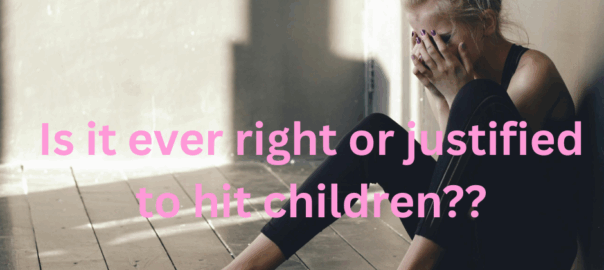
A child sat down wondering if its Is it ever right or justified to use violence against children?

Is It Ever OK to Hit Children? The Debate

Is it ever right to use violence and hit children? If this is a question you’ve asked yourself then keep reading.

On recent edition of a prominent US chat show the host advocated parents to “spank your kid’s a**” instead of being letting children go “crazy”. This was in relation to a news article on gentle parenting.

The question was in relation to a a video where a small child repeatedly smacked he mother in the face. The mother was practicing gentle parenting and was calmly asking her daughter ‘please don’t hit me’.

The assertion being that smacking would stop the child’s behaviour and the host referred more generally to unacceptable behaviour in shops etc, citing his own up upbringing where this type of behaviour would not have tolerated by his family.

So this raises the question. Is it ever OK to hit children and use violence to stop and correct(?) behaviour? Is there a time and place for a smack to stop or correct behavior? We use various phrases, smack, spank but its the same thing, to hit children, to use violence against children.

What is the UK law on people who hit children?

It is unlawful for a parent or carer to hit kids including their own children, except where this amounts to ‘reasonable punishment’. This defence is laid down in Section 58 Children Act 2004, but it is not defined in this legislation.Whether a ‘spank’ amounts to reasonable punishment will depend on the circumstances of each case, taking into consideration factors like the age of the child and the nature of the spank.

There are strict guidelines covering the use of reasonable punishment and it will not be possible to rely on the defence if you use severe physical punishment on your child which amounts to wounding, actual bodily harm, grievous bodily harm or child cruelty.

Smacking was banned in Scotland in 2020 and was followed in Wales in 2022, prompting renewed calls for the UK government to outlaw the practice in England and Northern Ireland.

This information is correct as at 31 7 2025 as provided by The law on smacking children – childlawadvice.org.uk

When you hit and use violence against children, what does it do to a Child’s Brain

As parents, we’d move mountains for our kids. We love them like crazy. And yet, somehow, they have a supernatural ability to push every single one of our buttons, driving us to a point where we might do something we regret… like spank them.

Do parents actually plan to hit kids and use violence or is it an emotional reaction to a situation?

The answer maybe in our upbringing, For previous generation the idea of being able to use violence, to   ‘spank my kid’ was more widespread and accepted.  Generally is was more acceptable to hit kids.  ‘A clip round the ear never did any harm’.  This leads us as parents to think “I turned out fine.” But what if that one smack does more than just sting for a minute? What if it actually sets off a chain reaction in a child’s brain, with effects that can ripple out for a lifetime? We’re going to look at what the science really says about using violence, using spanking and, more importantly, explore what we can do instead to raise kids who are both cooperative and incredibly resilient. If we hit kids their are consequences.

The Problem – A Giant’s Hand

From our grown-up point of view, a smack can seem like a minor, in-the-moment correction. But we have to try, just for a second, to see it through the child’s eyes. To a small child, a parent is everything. They’re your source of safety, your protector, your entire universe. And physically, let’s be honest, we’re giants. To hits kids conveys a message to that child.  I as a parent think its OK to communicate by force and use violence.


So when that giant—that source of all safety and love—intentionally causes pain, the child’s world gets flipped upside down. The message they get isn’t really about hitting their sibling.


The message is that the one person who is supposed to protect them is also,  sometimes, a threat.

So the simple notion its OK to spank my kid from an adult perspective, triggers far greater emotions and reactions in the child.

This isn’t about shaming parents. It’s about understanding this huge difference in perception. What we see as a quick course correction, a child’s brain registers as a danger signal. And as we’re about to see, that signal triggers a whole series of alarms in their developing mind, changing how they see the world and even how their brain physically gets wired. Decades of research have consistently shown that physical punishment violence is linked to harm to a child’s social, emotional, and cognitive development.


 The Science – A Brain on High Alert

So, what’s actually going on in their head when they get smacked? Thanks to neuroimaging, we don’t have to guess anymore. Groundbreaking research, a lot of it from scientists at Harvard, has given us a window right into the brain’s real-time response.

So is the idea, its OK to spank my kid, without serious consequences really true? Is it ever ok to hits kids?

In one major study, researchers used MRI scans to watch kids’ brains. They showed the children pictures of faces with either neutral or fearful expressions. What they found was pretty shocking. When they saw the fearful faces, the kids who had been spanked showed way more brain activity in multiple areas of their prefrontal cortex. This is the part of the brain that’s constantly scanning the environment for threats. Essentially, their brains were on high alert, working overtime to find danger.


And here’s the kicker: the brain activity of the spanked children looked exactly like the brain activity of children who had suffered what anyone would call severe abuse. Let that sink in for a moment. On a neurological level, the brain doesn’t seem to draw a big line between a smack and other forms of violence. It just recognizes a threat from a caregiver and starts rewiring itself to survive.


This constant “threat-detection” mode is a result of the brain’s stress response system getting triggered over and over. When a child is hit, their brain is flooded with stress hormones like cortisol. This is the body’s natural alarm, and it’s great for escaping real danger, like a tiger. But when that alarm is constantly being pulled, it becomes toxic to the developing brain. It can even lead to less gray matter in the prefrontal cortex—the very part of the brain in charge of self-control, decision-making, and regulating emotions.


Other studies have found that physical punishment is linked to adolescents being extra sensitive to their own mistakes and less responsive to positive things in their life. This state of constant alert, this neurological vigilance, doesn’t just stay in the brain. It spills out into a child’s daily life, with some serious and lasting consequences.

So is the idea, its OK to spank my kid, without serious consequences isn’t true. There are  consequences in following the belief that its OK to spank my kid but are there other consequences as well?


The changes in the brain that scientists are seeing aren’t just lab results; they show up in a child’s life in very real ways.


First, the risk for mental health challenges goes way up. Children who are physically punished are more likely to struggle with anxiety, depression, behavioral problems, and substance use disorders down the road. Their brains, basically trained to see threats everywhere, can create a constant, humming background of anxiety. A 2021 study found that kids smacked at age three were more likely to have poor mental health and more difficult behaviors all the way up to age 14.


Second, it can actually make kids more aggressive. It seems backward, right? Parents who spank are usually trying to stop aggression. But kids are always watching us. Social learning theory tells us they learn how to solve problems by seeing how we solve problems. When we use our size and power to get what we want, we’re modeling that aggression works. A massive review of studies involving over 160,000 kids confirmed it: physical punishment is linked with more aggression and antisocial behavior, not less. So when we hits kids it shows kids its ok to hit.


Third, it damages the single most important parenting tool we have: our relationship. Great parenting is built on a foundation of warmth and trust. Physical punishment chips away at that foundation and replaces it with fear. A child who’s afraid of being hit is not going to come to you for advice or to confess they messed up. That parent-child bond gets weaker, which just makes every other part of parenting harder.


And finally, it just doesn’t work to teach the right lesson. A smack might stop a behavior for a minute, but it doesn’t help a child understand why it was wrong. The child’s focus immediately shifts from “what I did” to “the pain I feel” and “my parent is scary.” It teaches them how to not get caught, not how to be a good person. Real discipline—which comes from a word that means “to teach”—is about guiding our kids to develop self-control. Physical punishment just isn’t built for that job.

There are still arguments to hit kids.

The “But I Turned Out Fine” Argument


Okay, so right about now, a lot of people are thinking, “But I was spanked, and I turned out fine.” This is probably the number one defense of spanking, and it’s a powerful one, so it’s worth talking about directly.

First off, people are incredibly resilient. We can and do overcome all sorts of difficult childhood experiences to become happy, successful adults. No one is saying that every single child who is spanked is doomed.


But let’s gently unpack the “I turned out fine” idea. For one thing, it’s totally subjective. We don’t have a control-version of ourselves to compare to. How do we know how we might have turned out if things were different? Is it possible we could have been even better than fine? Maybe a little less anxious, a little more confident, with a greater capacity for joy? We can’t ever know the road not taken.

More importantly, the mountain of research is clear: while you may have turned out fine, physical punishment dramatically increases the risk of negative outcomes. It’s like saying your grandpa smoked a pack a day and lived to be 90, so smoking isn’t dangerous. We all know that’s not true. We know smoking massively increases the risk of cancer and heart disease, even if not every smoker gets sick. In the exact same way, the evidence is overwhelming that smacking increases the risk of aggression, mental health problems, and struggles with learning.


Knowing these risks, the question isn’t, “Will spanking absolutely ruin my child?” The real question is, “Why would I take that risk at all, when there are better, more effective alternatives that build my child up and have no risks attached?”

An alternative way of looking at it is does the belief, its OK to spank my kid, mean you miss out on creating a better, happier and more content version of your child.  So how do you leave the idea its OK to spank my kid behind and progress?

The Solution – Building Brains, Not Fear


So, if the goal is to raise great kids without causing harm, what are we supposed to do when our child pushes us right to the edge? The answer is to shift our thinking from punishment to teaching. The goal isn’t to make a child pay for a mistake; it’s to give them the skills they need to not make that mistake again. This is often called positive discipline, and it’s all about connecting with our kids before we correct them.


Here are a few powerful alternatives that really work.

First, try a “Time-In” instead of a “Time-Out.” A traditional time-out sends a kid away to handle their overwhelming feelings all by themselves. A time-in means you go with them to a quiet space. You don’t even have to talk at first. You just sit there, being a calm anchor in their emotional storm. This teaches them that you’re their safe space during their hardest moments, not someone who will abandon them.


Second, use redirection. Little kids, especially, often “misbehave” out of curiosity or a simple lack of impulse control, not because they’re being malicious. If your toddler is banging a toy on the new coffee table, instead of yelling and smacking their hand, you can say, “Ooh, the car is for the floor! Let’s go find a great ramp for it!” You see their need to play and just steer that energy toward something that works.


Third, offer limited choices. A lot of challenging behavior is just a bid for a little bit of power in a world where kids have none. Offering simple choices gives them a sense of control. Instead of barking, “Put your coat on now!” you could try, “It’s time to leave. Do you want to wear the blue coat or the red one?” You’re still in charge—leaving isn’t up for debate—but they get a voice in how it happens.


Finally, lean into empathy and communication. After things have calmed down, get on their level. “I saw you were so mad that your sister took your toy. It’s okay to feel mad, but it’s not okay to hit. Next time you feel that angry, you can stomp your feet or come tell me, and I’ll help you.” This shows them you understand, states the boundary clearly, and gives them a better plan for next time. It’s a masterclass in emotional intelligence.

Conclusion & CTA

The science couldn’t be clearer. That one smack—that split-second decision to use force—does so much more than just sting. It sends a threat signal straight to a child’s brain, changing its development and wiring it for fear. It increases the long-term risk of anxiety, depression, and aggression, and it doesn’t even succeed at teaching the lessons we want our kids to learn.

The idea its OK to spank my kid is outdated and discredited by clear evidence.

But the science also points us to a much better path. By shifting from punishment to connection, we can guide our kids effectively while making our relationship with them even stronger. We can be brain-builders, not fear-builders. It’s not always the easy way, but it’s the one that leads to raising resilient, emotionally healthy, and truly cooperative people.


So were at the end of, is it OK to spank my kid? We hope we have presented the information clearly. We hope you consider and think about your actions as every action has a consequence. We know you want to do the best for your child and even believing its OK to spank my kid, is believing you are doing the best for your child.  We hope this article at the very least makes you think and research the subject yourself.  We hope you keep in mind the alternative to its OK to spank my kid. Maybe replace the word spank with use violence.  Spank sounds soft and without consequences. To use violence sounds more serious and a bigger step. the reality is there both the same. They both use violence.  Smacking is violence.

We’d love to hear from you in the comments – what are some gentle strategies that have worked for your family? Your experience could be a huge help to another parent reading.


Do you still believe its ok to hit kids?

Being a parent is difficult but there is help available.

Being a parent is hard, we know were parents. that why we created CosyChats.com to help other parents by providing much needed personalised parent support.

Parent support that can help you navigate the pitfalls of being a parent. Learn in an empathetic and understanding from the huge experience and knowledge parents on CosyChats have.

CosyChats is a personalised parent support Service that can provide support to parents across a wide range of parenting issues.
Features of CosyChats.com 1-2-1 personalised parenting service.
🧷 Safe Spaces Free From Judgement and Shame

👍🏼Where No Problem Is Too Big and No Question To Small

👩‍👦Offering Compassion and Understanding

🆘From Real Parents Who Know How Difficult Being a Parent Can Be

🧑‍🤝‍🧑Real Lived Knowledge & Experience

💻Virtual Sessions Where You Are In Control


Top 10 Benefits of the CosyChats service.
👍🏼Access to a wealth of Parenting Experience and Knowledge.

👍🏼Your own personalised 1-2-1 service.

👍🏼A safe space free from judgement and shame.

👍🏼You are in control and choose the CosyChats parent and service that’s right for you.

👍🏼Years of lessons learnt and experience gained that can all be shared.

👍🏼Being understood and your needs heard.

👍🏼No question is too small, no problem too big.

👍🏼Compassion and support from people who understand how difficult being a parent can be.

👍🏼Its affordable and is far greater value than professional providers.

👍🏼Meetings are on online so you can join from where you feel most comfortable.


This Blog was written by an adoptive parent of three children who understands children. How yes they can push your buttons but NO doesn’t believe or follow, its OK to spank or use violence on my kid. We do not hit our kids and never will.  They have been through trauma already and accepting its OK to hit kids and use violence just adds to your child’s trauma.

No detail or pictures can be shared to protect the adopted children’s privacy and right to a wonderful new life where physical abuse or violence is not part of their life anymore.

a dad and son walking while the dad explains why being a positive role model is a good trait in a father

How To Create Positive Role Models For Children

Why do children need positive role models?

Younger children look up to their parents like hero’s. Sheer bewilderment about how amazing you are. How you are the source of knowledge and authority.  For them you are the source of the universe but as children grow so do influences on them.  They begin to form their own opinions and find influence and hero worship elsewhere.  As parents you understand this.  As difficult as it is to relinquish that role, you cannot be your child’s only hero.  There has to be space for other hero’s for your children but as parents you cannot control these choices or influences.

Read Blog: How to Create a Strong Relationship With Your Children – Cosychats

Your parents probably spoke about not falling in with the wrong crowd and while that is true there is a whole new crowd on-line and in social media. So many of these influences are poor and /or misguided.

Your children need positive role models. As parents we need to guide them or at the very least be able to have a conversation to counter the toxic bubbles that exist online.  Teenage years especially can be hard and parents need to keep on talking, keep on being a positive part your child’s life.

Read Blog: Are TEENAGERS Safe With Their Lives Online?

Positive role model’s are like a light that guide your children through a dark forest of life where pitfalls and evils lurk. Self doubt, body shaming, drugs, alcohol the list is endless but your child is not alone you are their for them.  You are their guide and you may lose sight of them at times but you keep your beacon of positively and support aloft for them.

Parents need to be able to provide positive support and guidance for their children.

It sounds so obvious but so many parent lose sight of this.  ‘They’ve made their own choices and must suffer the consequences.’  While natural consequence is a way of learning its not a way of washing your hands of you children. Your children need that positive guide throughout their lives.  We never lose the need for parental support and wisdom. Cosychats is built upon the benefit of sharing experience and knowledge and this is so true of the parent child relationship.

You never give up on your children.

Read: FORCING Your Child to Follow YOUR Dreams Not Theirs?

There are so many competing influences and voices tempting your children.

👍🏼Personalised Parent Support from CosyChats.com👍🏼

The Power of Social Media and the Internet

We know children no longer watch TV preferring social media videos and influencers.

Children spend six hours or more a day on screens – BBC News
This is a world parents may not understand or be part of. Its a largely an unregulated world relying on the free speech argument. Online safety laws unsatisfactory, Technology Secretary Peter Kyle says – BBC News 

Children can now easily find role models online and here in lies the problem.  There is little or no regulation that prevents children forming unrealistic and damaging expectations due to the influence of role models.

If you think this is harmless browsing think again.
Kent headteachers back smartphone ban after Netflix’s Adolescence – BBC News

‘Boys formed Andrew Tate club in School’ – teacher

Our experience echo’s this where my 11 year old son starting quoting Andrew Tate to me. Talking about women in a derogatory way and using explicit terms. I was quite shocked but i shouldn’t have been surprised. This is the world they live in.

What did surprise me was that he didn’t take much notice of me. I was the positive role model and being ignored

CosyChats is for parents by parents. Were here to listen and support you with whatever help you need being a parent.  We’re a parenting community  that understands how difficult being a parent can be. 

When i tried to explain why Andrew Tate wasn’t a positive role model. What Andrew Tate represents and says aren’t good things, he looked at me and said i didn’t know what i was talking about.  This wasn’t going to be a quick conversation and it took plenty of explaining to challenge the stereotype he had formed.

How to create positive role models for children?
Be a positive role model.

Now more than ever parents need to be positive role models.  Check your behavior. Think about what you project to your children.  Re-enforce your own positive behaviour.

Talk to your children.

Understand what they are viewing. Whet they are interested in. Who their friends are.  Its not an inquisition, do it calmly and compassionately.

Discuss things.

If they mention a influence or belief you don’t agree with explore it with them.  Don’t just shut them down.  With my son it took a few conversations to put an alternative view across.  I didn’t just say Andrew Tate was wrong as that’s my view. Its about understanding his view and exploring it to educate him and then re enforcing the education.

Be vigilant

Its surprising how quickly views from.  From an early age.  In the BBC report the boys were under 10.  Social media and the internet mean your children are exposed to greater content at an earlier age. That positive role model may not be in your child’s life and you don’t realise it.

Being a parent is amazing and life changing but also difficult and challenging.  Children can test you and  we believe every parent needs plenty of support. We know we’re parents ourselves.  Speak to other parents and get the help you need and the support your family needs.
Check your internet setting.

If you don’t have child filters on, turn them on but don’t rely on them.  They didn’t stop my son learning about Andrew Tate.

Promote positive influences

Use positive role models. Explore and share positive role models.  Don’t force it maybe just put a picture up and let them explore.  Use local clubs. Sports clubs can have positive role models and have positive influences built in. Boxing clubs teach respect and self discipline. Football clubs promote team work.   Libraries usually have book and reading clubs.  We have a great local art centre that does loads of half terms clubs and events to promote creativity and self expression.


CosyChats Personalised Parent Support for You, because Family Is Everything.

CosyChats is a personalised parent support Service that can provide support to parents across a wide range of parenting issues including how to connect with your children and spend quality time together. How to leave your parenting guilt at the door and build a solid and happy relationship with your children.

Parents on Cosychats.
🛟1-2-1 Personalised Parent Support Sessions

🧷 Safe Spaces Free From Judgement and Shame

👍🏼Where No Problem Is Too Big and No Question To Small

👩‍👦Offering Compassion and Understanding

🆘From Real Parents Who Know How Difficult Being a Parent Can Be

🧑‍🤝‍🧑Real Lived Knowledge & Experience

💻Virtual Sessions Where You Are In Control


Top 10 Benefits of the CosyChats service.

👍🏼Access to a wealth of Parenting Experience and Knowledge.

👍🏼Your own personalised 1-2-1 service.

👍🏼A safe space free from judgement and shame.

👍🏼You are in control and choose the CosyChats parent and service that’s right for you.

👍🏼Years of lessons learnt and experience gained that can all be shared.

👍🏼Being understood and your needs heard.

👍🏼No question is too small, no problem too big.

👍🏼Compassion and support from people who understand how difficult being a parent can be.

👍🏼Its affordable and is far greater value than professional providers.

👍🏼Meetings are on online so you can join from where you feel most comfortable.

CosyChats is a personalised parent support Service that can provide support to parents across a wide range of parenting issues including how to connect with your children and spend quality time together.