Tag Archives: child behavior

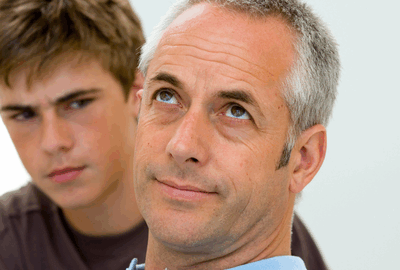
Should You Be Concerned If Your Child Calls You Mate or Bruv?

I can’t remember which came first, Mate or Bruv or when mate became routine. Or when mum and dad went out the window.

FORCING Your Child to Follow YOUR Dreams Not Theirs?

I can remember thinking don’t be that parent that picks them up on everything. Let it go and they’ll get bored of it. We’ll like most parenting decisions that didn’t work as exactly planned.

A parent learning how to create a strong bond with their child


This question i asked myself is it such a bad thing if they do call me mate?

For some parents, hearing this familiar term of endearment directed at them feels perfectly natural. For others, it sparks an immediate concern: Am I losing my authority? Are they being disrespectful? i think i was in the latter camp.  For transparency being called bruv or mate was something that didn’t work for me but my children are getting older.

It Takes a Village to Raise a Child – but who supports you? – Cosychats

Is ‘mate’ just casual language and not disrespectful?

Is the term mate just an example of a friendly, and informal family dynamic. More a sign of a strong bond, not a worrying trend. Where my children growing up and just adapting their language to suit a more level relationship?  Were they just expressing themselves in language they were more familiar with?

I prefer to be called dad.

My Child Has Started Vaping What Should I Do?

I’ll be honest If they’d have asked me (which they didn’t) I’d have said i preferred dad to mate and bruv.  It may be traditional and possibly more formal but it’s what i am.  I am their dad, not their mate or bruv. Although when i thought about it i wanted to be more than their dad.  I did want a strong and open bond between us.  I want them to be able to talk to me about anything.  If something is going on in their lives i want them to ask me and not some chat bot or AI. If the price of them being more open was being called mate or bruv every so often then i could cope with it.

Parents helping parents


This was reinforced by a research

‘When a child calls you “mate,” it often symbolizes this kind of dynamic. It implies:

  • Closeness: They feel comfortable enough to use informal language.

  • Trust: They see you as someone they can confide in, not just an authority figure.

  • Affection: The term, in its common use, is affectionate and warm.

The word can be a sweet indicator that your efforts to build a strong, friendly bond are working.’


I don’t agree 100% with this.  I think the words mate and bruv have developed and spread. Is there a distinction between my children calling friends mate and bruv and them calling me the same.  It doesn’t feel like it. It feels disrespectful but may be its not as disrespectful as i originally thought.


Whats more important the word or the tone and context.
Like everything parenting the answer isn’t straight forward. I think  the intent behind the word is far more important than the word itself.
‘Hey mate, can we play a game?’—doesn’t feel disrespectful.  The tone is casual and friendly.


However, any word can be used disrespectfully if delivered with the right attitude. If children rolls their eyes, slams their bedroom door, and yells, “Leave me alone, mate!”, the issue isn’t the word “mate.” The issue is the disrespectful tone, the boundary-testing behavior, and the underlying anger.


In this scenario, you would address the disrespectful behavior and tone, not the specific vocabulary used. The conversation would be about communication boundaries in your house, not about the appropriateness of the word “mate.”


Replace dad with mate in the above scenario and i think the outcome is the same.  So context and delivery does matter.


Setting Boundaries

Boundaries are their to be tested and sometimes boundaries no longer apply.  As your children grow they they can do many more things and you adjust your behaviour and expectation accordingly.  Your relationship adapts but i think if you personally feel uncomfortable being called “mate,”  or ‘bruv’ finding it too informal or feeling it undermines your parental role, you are completely within your rights to ask your child to stop.

Keeping calm and communicating clearly.
The key is to communicate this clearly and calmly, without making them feel that their affection was misplaced.
You might say:
“I know you mean it in a friendly way, and I love that we have a close relationship. But I prefer to be called ‘Mom’/’Dad’. Can you try to remember that?”
For younger children, gentle correction is key: “I’m not your mate, I’m your Daddy.”
If you’re okay with it most of the time but want formal titles in public or around grandparents, you can set those situational boundaries. The most important thing is consistency in your expectations.


My boundaries
I’m their dad.  Thats my title and its pretty unique i think.  I want the recognoition and respect i think dad brings.  In my life as a parent so much is eroded and disappears but i’m still their dad and while it can be argued that its just a word and being their dad dosn’t change just because theycall me mate, for me it makes a diofference and i asked them to call me dad.


The Cultural Context: More Than Just a Slang Term
The interpretation of the word “mate” is deeply rooted in geography. What is considered informal in one country is the norm in another.
In the United States, for example, addressing a parent with anything other than “Mom” or “Dad” (or a formal variation like “Mother” or “Father”) might be seen as cheeky or impertinent. The parent-child dynamic in many American households often emphasizes a more defined hierarchical structure.


In contrast, within the UK, Australia, and New Zealand, “mate” is a staple of everyday language. It’s a versatile word used between friends, colleagues, and even strangers as a polite, friendly address. It is a term of endearment, fellowship, and equality.
In these cultures, it’s incredibly common for parents to refer to their children as “mate” from a very young age: “Come on, mate, time for your bath.” When a child then reciprocates this term, they are simply mimicking the language of affection and familiarity they hear every day. They are not trying to demote you from ‘parent’ to ‘peer’; they are just using the vocabulary of your shared household.


CosyChats is a personalised parent support Service that can provide support to parents across a wide range of parenting issues including how to bring up happy and well round children. how to allow children to follow their dreams and be happy.
Introducing CosyChats

🛟1-2-1 Personalised Parent SupportSessions

🧷 Safe Spaces Free From Judgement and Shame

👍🏼Where No Problem Is Too Big and No Question To Small

👩‍👦Offering Compassion and Understanding

🆘From Real Parents Who Know How Difficult Being a Parent Can Be

🧑‍🤝‍🧑Real Lived Knowledge & Experience

💻Virtual Sessions Where You Are In Control

Top 10 Benefits of the CosyChats service.

👍🏼Access to a wealth of Parenting Experience and Knowledge.

👍🏼Your own personalised 1-2-1 service.

👍🏼A safe space free from judgement and shame.

👍🏼You are in control and choose the CosyChats parent and service that’s right for you.

👍🏼Years of lessons learnt and experience gained that can all be shared.

👍🏼Being understood and your needs heard.

👍🏼No question is too small, no problem too big.

👍🏼Compassion and support from people who understand how difficult being a parent can be.

👍🏼Its affordable and is far greater value than professional providers.

👍🏼Meetings are on online so you can join from where you feel most comfortable.

Thank you for reading this blog ‘Are my children being disrespectful?’

Good or bad parent

Am I a Good or Bad Parent?

Am I a good or bad parent? How many times have you asked yourself this? A 1,000 times or more?

CosyChats is a parenting community and this is a question parents ask themselves. We’re parents to and we’ve asked it ourselves far too many times.  At CosyChats we know parents can be hard on themselves and this creates self doubt, fear and lack of confidence, often unnecessarily.

I dislike the term bad parent. Parenting is hard and demanding. Describing someone as a bad parent feels harsh but bad parents do exist though and we need to recognise this.  If we don’t we don’t give those parents a chance to change their lives.

Why are parents so hard on themselves?

Often parents are harder on themselves than they need to be. The probability is that as your concerned enough to ask if your a good or bad parent you at least want to improve being a parent. Most likely your not a bad parent. Your also not a perfect parent but probably do suffer periods of self doubt and feeling out of your depth. I think this is more common that we think.  Parents seem to be hard on themselves because being a parent is a really important job with lots of responsibility. We don’t want to get it wrong.

help for parents

Being a parent isn’t easy and parents can be too hard on themselves not celebrating enough themselves and what we get right as parents. We know this because we’re parent too. At Cosychats we host a range of parents who want to help and support you.

It is because were parents we understand and want to help, to share our experience and knowledge in a supportive and non judgmental way. Were not perfect parents nor do we know all the answers but were here to help.

There are no perfect parents.

Now more than ever the desire to be the perfect exists and parenting is no different.  Social media drives a lot of this with influence’rs posting their perfections and not their reality.

Don’t fall into comparison or judgement trap. Don’t create a race you cannot win.  Perfect parents do not exist.  At CosyChats we interact with lots of parents and we’ve never found a perfect parent but some of the most grounded and accepting (of themselves) parents are ones who learn to accept their mistakes, learn and move on. Parenting doesn’t always allow you time to think in the moment but once those seeds of doubt have been planted they will grow.

Talking to another parent helps you to ground your ability and expectations. One of our parents sums it up as ‘most parents are just winging it anyway’. On Cosychats you’ll find lots of helpful and supportive parents who want to help and help and support you however they can.

Taking the pressure off ourselves as parents.

There is enough pressure on parents without us adding more ourselves but that’s what we do.  We set expectations and judge ourselves harshly. As parents we should look for ways to reduce stress and pressure on ourselves.  Step back and think about where your pressure comes from, friends, social media, family?  Find it and do your best to stop it.

This doesn’t mean isolating yourself its learning to manage and deal with people around you that don’t add to more pressure and expectation to your life.  Cosychats.com is a parenting community and we host parent who you can book a session with, parents who can listen and help you create your own safe space to reduce pressure.

Every parents makes mistakes and has bad days.

Children don’t come with a manual. What works one day fails the next. What works for one child may not work for another. Being a parent is a complex and challenging job and we can interpret lots of things as making us bad parents when they are just part of being a parent.

Things that don’t make us bad parents.

Bad parents do exist though.  We know that but lets not tarnish ourselves as bad parents just yet.  Lets go through things we might think make us bad parents but actually don’t.

Getting the work life balance wrong.

We provide for our families. That’s what families do and going to work can be demanding. The work life balance is unlikely to always be level and often swings but that doesn’t make us bad parents.  It makes us busy and committed parents.  However busy you are make even a small window of time for your children.  They’ll love and appreciate you for it. Read Get Your Work Life Balance Right

Not being rich.

Money does not improve us as parents.  Money can add security and pay for nice things but it never replaces time spent with children.  Forget thinking money will make you a better parent.  Quality time with your children is free.

Being inexperienced parents

Every parent has to start off somewhere and all the reading and preparation can’t compare you for the moment you become a parent.  So many parents and grandparents say they learn something new every day.  Being a parent is accepting you don’t know everything and are still learning. Children are a puzzle that changes with a new challenge every day. Learning is part of it.  Cosychats is a parenting community where the most experienced and knowledgeable parents freely admit they can still be surprised and learn new things every day.  That’s just parenting. Read Stop feelings of isolation being a parent

Making mistakes

Following on from inexperience comes learning.  Learning through making mistakes. So much of parenting is trial and error.  Finding out what works and what doesn’t.  There is no pause button and sometimes you just have to go with what you think is best and hope for the best.  Its not perfect but its how parenting works for so many families.this doesn’t make you bad parent’s.

Not being able to cope.

There is a sense of failure at not being able to cope as a parent but so many parents we speak to, including ourselves have periods of not being able to cope as a parent.  There it is, sometimes its just too much.  We want to walk outside and scream or curl up in a ball in a warm dark place.  Fade into the background.  Not be pestered.  Not have responsibility for your children.  Sometimes its just too much and we shouldn’t apologise for that.  That’s just the way it is.  Recognise your own limitations and try as best as you can to stay within them.  Not always possible but step beyond your own limitations and you put more pressure on yourself. Your not superhuman and eventually all that pressure will weight down on you.

Addictions.

Being a parent does not shield you from addictions.  Life unfortunately is not that simple.  Good parents can have addictions and addictions can be strong.  Like any addiction the solution is to get help especially when that addiction starts to impact the welfare of your children.

Recognising you own addictions.

Before you skip past this section take a moment to recognise your own addictions.  Drugs, gambling and alcohol are the obvious ones but so many addictions lie in the background unnoticed.  Recognising and being honest about your own addictions, really helps. Most people can’t let go of their phones and some spend time on their phone over time with their children.  This doesn’t necessarily make you a bad parent but it does make you a distracted one and to some degree a neglectful one.  Build time off your phone and with your family.  Be a good role model.

Read Is PHONE ADDICTION Ruining Your Family Bonding?

Being a poor role model.

Do what i say not what i do is seen through and children recognise and copy your behaviours. Bad habits can repeat through generations.  Take time to think about this and change your behaviours.  Your can’t protect your children from life but you can change or alter your behaviours to set a good example to your children.  This is in your control.

Read How a Role Model Can Empower Kids

Not getting on with your children.

Just because you don’t get on with your children doesn’t make you a bad parent. In fact the opposite may be true.  Setting guidelines and making rules isn’t going to make you popular.  Being a parent isn’t about being your child’s best friend, although if you can get  that balance right, great for you.

Read How to Create a Strong Relationship With Your Children – Cosychats

Your children don’t turn out the way you wanted.

Allowing your children space and giving them tools to choose and succeed on their own path is part of your job as  parent.  They may change career paths and i’m sure make mistakes along the way but allowing them freedom to decide and find happiness seems the right thing to do. This is a big topic and some parents disagree. Read FORCING Your Child to Follow YOUR Dreams Not Theirs?

So am I a good parent or a bad parent?

What is a bad parent really?

I think most of us find it easier to understand what a good parent is but what is a bad parent really? We thought about this a lot and think at the core of that question is the basics.

Being a bad parent is, intentionally or neglectfully;

-neglect your children’s needs,

-don’t feed or care for your children,

-don’t keep your family safe, .

-harm or neglect your children.

Conclusion – So am I a bad parent?

This blog is to re assure most parents that there not bad parents.  They’re human and full of self doubt that makes them vulnerable.  Parents make mistakes, doing a difficult job. They have occasional bad behaviours but are still good parents. Parenting can be isolating and this allows fears and doubts to grow. Taking time to talk to other parents help you recognise the imperfections in other parents and realise your own strengths and strengths as a parent.

Sure your not the perfect parent but who is? Recognising your not a bad parent really helped us move on as parents. To accept our parenting imperfections and worry less about them and spend more time with our children.

If you still consider yourself a bad parent.

There is no blame here. If you are unable to care and protect your children, you and your children need help. If this is you then please reach out and seek help. A good starting point we found is your local GP or NHS Service. 

Parenting Support.

We exist to support parents.

CosyChats.com is a community of parents. We host experienced parents who can provide Personalised Parent Support including sharing parenting knowledge and experience including parenting mistakes and mishaps. Parents who can chat, listen and be there for you. Parents who understand how difficult parenting can be.

A parenting safe space free from judgement and shame where no question is too small and not issue to big.

Why Parents Should use the CosyChats parent support service.

🛟1-2-1 Personalised Parent Support Sessions

🧷Safe Parent Support Spaces Free From Judgement and Shame

👍🏼Where No Parenting Problem Is Too Big and No Parenting Question Too Small

👩‍👦Parents Supporting Parents Offering Compassion and Understanding

🆘Practical Parenting Support Created by UK Parents

🧑🏼‍🦱Parent Mentoring from Parents with Real Lived Parenting Knowledge & Experience

💻Online Parenting Support from the comfort of your own home.

Top 10 Benefits of the CosyChats parent support service.

👍🏼Access to a wealth of Parenting Experience and Knowledge.

👍🏼A Personal Parenting Mentor for you

👍🏼Parent support via phone, Text or On-Line.

👍🏼Support Groups for key development stages

👍🏼Flexible parenting support sessions.

👍🏼Online parenting support at a reasonable cost.

👍🏼Parent support sessions can be gifted to a parent who needs parental support.

👍🏼Parent to parent support group harness wide parenting experience.

👍🏼Support services are booked in 10 minute slots.

👍🏼Parenting support from real parents who want to help.

help for parents

Thank you for reading the blog  (am-i-a-good-or-bad-parent). We hope we have offered you re-assurance and given the confidence to make mistakes and move on without being too hard on yourself.

About the author.

This blog was written by a parent of three adopted children who does have occasional bad  behaviours and plenty of parenting self doubts but is a good parent and recognises this.

Part of adoption for us is not being able to share pictures or information on ourselves to protect our children childhood.


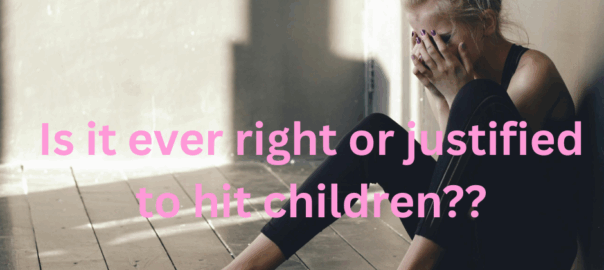
A child sat down wondering if its Is it ever right or justified to use violence against children?

Is It Ever OK to Hit Children? The Debate

Is it ever right to use violence and hit children? If this is a question you’ve asked yourself then keep reading.

On recent edition of a prominent US chat show the host advocated parents to “spank your kid’s a**” instead of being letting children go “crazy”. This was in relation to a news article on gentle parenting.

The question was in relation to a a video where a small child repeatedly smacked he mother in the face. The mother was practicing gentle parenting and was calmly asking her daughter ‘please don’t hit me’.

The assertion being that smacking would stop the child’s behaviour and the host referred more generally to unacceptable behaviour in shops etc, citing his own up upbringing where this type of behaviour would not have tolerated by his family.

So this raises the question. Is it ever OK to hit children and use violence to stop and correct(?) behaviour? Is there a time and place for a smack to stop or correct behavior? We use various phrases, smack, spank but its the same thing, to hit children, to use violence against children.

What is the UK law on people who hit children?

It is unlawful for a parent or carer to hit kids including their own children, except where this amounts to ‘reasonable punishment’. This defence is laid down in Section 58 Children Act 2004, but it is not defined in this legislation.Whether a ‘spank’ amounts to reasonable punishment will depend on the circumstances of each case, taking into consideration factors like the age of the child and the nature of the spank.

There are strict guidelines covering the use of reasonable punishment and it will not be possible to rely on the defence if you use severe physical punishment on your child which amounts to wounding, actual bodily harm, grievous bodily harm or child cruelty.

Smacking was banned in Scotland in 2020 and was followed in Wales in 2022, prompting renewed calls for the UK government to outlaw the practice in England and Northern Ireland.

This information is correct as at 31 7 2025 as provided by The law on smacking children – childlawadvice.org.uk

When you hit and use violence against children, what does it do to a Child’s Brain

As parents, we’d move mountains for our kids. We love them like crazy. And yet, somehow, they have a supernatural ability to push every single one of our buttons, driving us to a point where we might do something we regret… like spank them.

Do parents actually plan to hit kids and use violence or is it an emotional reaction to a situation?

The answer maybe in our upbringing, For previous generation the idea of being able to use violence, to   ‘spank my kid’ was more widespread and accepted.  Generally is was more acceptable to hit kids.  ‘A clip round the ear never did any harm’.  This leads us as parents to think “I turned out fine.” But what if that one smack does more than just sting for a minute? What if it actually sets off a chain reaction in a child’s brain, with effects that can ripple out for a lifetime? We’re going to look at what the science really says about using violence, using spanking and, more importantly, explore what we can do instead to raise kids who are both cooperative and incredibly resilient. If we hit kids their are consequences.

The Problem – A Giant’s Hand

From our grown-up point of view, a smack can seem like a minor, in-the-moment correction. But we have to try, just for a second, to see it through the child’s eyes. To a small child, a parent is everything. They’re your source of safety, your protector, your entire universe. And physically, let’s be honest, we’re giants. To hits kids conveys a message to that child.  I as a parent think its OK to communicate by force and use violence.


So when that giant—that source of all safety and love—intentionally causes pain, the child’s world gets flipped upside down. The message they get isn’t really about hitting their sibling.


The message is that the one person who is supposed to protect them is also,  sometimes, a threat.

So the simple notion its OK to spank my kid from an adult perspective, triggers far greater emotions and reactions in the child.

This isn’t about shaming parents. It’s about understanding this huge difference in perception. What we see as a quick course correction, a child’s brain registers as a danger signal. And as we’re about to see, that signal triggers a whole series of alarms in their developing mind, changing how they see the world and even how their brain physically gets wired. Decades of research have consistently shown that physical punishment violence is linked to harm to a child’s social, emotional, and cognitive development.


 The Science – A Brain on High Alert

So, what’s actually going on in their head when they get smacked? Thanks to neuroimaging, we don’t have to guess anymore. Groundbreaking research, a lot of it from scientists at Harvard, has given us a window right into the brain’s real-time response.

So is the idea, its OK to spank my kid, without serious consequences really true? Is it ever ok to hits kids?

In one major study, researchers used MRI scans to watch kids’ brains. They showed the children pictures of faces with either neutral or fearful expressions. What they found was pretty shocking. When they saw the fearful faces, the kids who had been spanked showed way more brain activity in multiple areas of their prefrontal cortex. This is the part of the brain that’s constantly scanning the environment for threats. Essentially, their brains were on high alert, working overtime to find danger.


And here’s the kicker: the brain activity of the spanked children looked exactly like the brain activity of children who had suffered what anyone would call severe abuse. Let that sink in for a moment. On a neurological level, the brain doesn’t seem to draw a big line between a smack and other forms of violence. It just recognizes a threat from a caregiver and starts rewiring itself to survive.


This constant “threat-detection” mode is a result of the brain’s stress response system getting triggered over and over. When a child is hit, their brain is flooded with stress hormones like cortisol. This is the body’s natural alarm, and it’s great for escaping real danger, like a tiger. But when that alarm is constantly being pulled, it becomes toxic to the developing brain. It can even lead to less gray matter in the prefrontal cortex—the very part of the brain in charge of self-control, decision-making, and regulating emotions.


Other studies have found that physical punishment is linked to adolescents being extra sensitive to their own mistakes and less responsive to positive things in their life. This state of constant alert, this neurological vigilance, doesn’t just stay in the brain. It spills out into a child’s daily life, with some serious and lasting consequences.

So is the idea, its OK to spank my kid, without serious consequences isn’t true. There are  consequences in following the belief that its OK to spank my kid but are there other consequences as well?


The changes in the brain that scientists are seeing aren’t just lab results; they show up in a child’s life in very real ways.


First, the risk for mental health challenges goes way up. Children who are physically punished are more likely to struggle with anxiety, depression, behavioral problems, and substance use disorders down the road. Their brains, basically trained to see threats everywhere, can create a constant, humming background of anxiety. A 2021 study found that kids smacked at age three were more likely to have poor mental health and more difficult behaviors all the way up to age 14.


Second, it can actually make kids more aggressive. It seems backward, right? Parents who spank are usually trying to stop aggression. But kids are always watching us. Social learning theory tells us they learn how to solve problems by seeing how we solve problems. When we use our size and power to get what we want, we’re modeling that aggression works. A massive review of studies involving over 160,000 kids confirmed it: physical punishment is linked with more aggression and antisocial behavior, not less. So when we hits kids it shows kids its ok to hit.


Third, it damages the single most important parenting tool we have: our relationship. Great parenting is built on a foundation of warmth and trust. Physical punishment chips away at that foundation and replaces it with fear. A child who’s afraid of being hit is not going to come to you for advice or to confess they messed up. That parent-child bond gets weaker, which just makes every other part of parenting harder.


And finally, it just doesn’t work to teach the right lesson. A smack might stop a behavior for a minute, but it doesn’t help a child understand why it was wrong. The child’s focus immediately shifts from “what I did” to “the pain I feel” and “my parent is scary.” It teaches them how to not get caught, not how to be a good person. Real discipline—which comes from a word that means “to teach”—is about guiding our kids to develop self-control. Physical punishment just isn’t built for that job.

There are still arguments to hit kids.

The “But I Turned Out Fine” Argument


Okay, so right about now, a lot of people are thinking, “But I was spanked, and I turned out fine.” This is probably the number one defense of spanking, and it’s a powerful one, so it’s worth talking about directly.

First off, people are incredibly resilient. We can and do overcome all sorts of difficult childhood experiences to become happy, successful adults. No one is saying that every single child who is spanked is doomed.


But let’s gently unpack the “I turned out fine” idea. For one thing, it’s totally subjective. We don’t have a control-version of ourselves to compare to. How do we know how we might have turned out if things were different? Is it possible we could have been even better than fine? Maybe a little less anxious, a little more confident, with a greater capacity for joy? We can’t ever know the road not taken.

More importantly, the mountain of research is clear: while you may have turned out fine, physical punishment dramatically increases the risk of negative outcomes. It’s like saying your grandpa smoked a pack a day and lived to be 90, so smoking isn’t dangerous. We all know that’s not true. We know smoking massively increases the risk of cancer and heart disease, even if not every smoker gets sick. In the exact same way, the evidence is overwhelming that smacking increases the risk of aggression, mental health problems, and struggles with learning.


Knowing these risks, the question isn’t, “Will spanking absolutely ruin my child?” The real question is, “Why would I take that risk at all, when there are better, more effective alternatives that build my child up and have no risks attached?”

An alternative way of looking at it is does the belief, its OK to spank my kid, mean you miss out on creating a better, happier and more content version of your child.  So how do you leave the idea its OK to spank my kid behind and progress?

The Solution – Building Brains, Not Fear


So, if the goal is to raise great kids without causing harm, what are we supposed to do when our child pushes us right to the edge? The answer is to shift our thinking from punishment to teaching. The goal isn’t to make a child pay for a mistake; it’s to give them the skills they need to not make that mistake again. This is often called positive discipline, and it’s all about connecting with our kids before we correct them.


Here are a few powerful alternatives that really work.

First, try a “Time-In” instead of a “Time-Out.” A traditional time-out sends a kid away to handle their overwhelming feelings all by themselves. A time-in means you go with them to a quiet space. You don’t even have to talk at first. You just sit there, being a calm anchor in their emotional storm. This teaches them that you’re their safe space during their hardest moments, not someone who will abandon them.


Second, use redirection. Little kids, especially, often “misbehave” out of curiosity or a simple lack of impulse control, not because they’re being malicious. If your toddler is banging a toy on the new coffee table, instead of yelling and smacking their hand, you can say, “Ooh, the car is for the floor! Let’s go find a great ramp for it!” You see their need to play and just steer that energy toward something that works.


Third, offer limited choices. A lot of challenging behavior is just a bid for a little bit of power in a world where kids have none. Offering simple choices gives them a sense of control. Instead of barking, “Put your coat on now!” you could try, “It’s time to leave. Do you want to wear the blue coat or the red one?” You’re still in charge—leaving isn’t up for debate—but they get a voice in how it happens.


Finally, lean into empathy and communication. After things have calmed down, get on their level. “I saw you were so mad that your sister took your toy. It’s okay to feel mad, but it’s not okay to hit. Next time you feel that angry, you can stomp your feet or come tell me, and I’ll help you.” This shows them you understand, states the boundary clearly, and gives them a better plan for next time. It’s a masterclass in emotional intelligence.

Conclusion & CTA

The science couldn’t be clearer. That one smack—that split-second decision to use force—does so much more than just sting. It sends a threat signal straight to a child’s brain, changing its development and wiring it for fear. It increases the long-term risk of anxiety, depression, and aggression, and it doesn’t even succeed at teaching the lessons we want our kids to learn.

The idea its OK to spank my kid is outdated and discredited by clear evidence.

But the science also points us to a much better path. By shifting from punishment to connection, we can guide our kids effectively while making our relationship with them even stronger. We can be brain-builders, not fear-builders. It’s not always the easy way, but it’s the one that leads to raising resilient, emotionally healthy, and truly cooperative people.


So were at the end of, is it OK to spank my kid? We hope we have presented the information clearly. We hope you consider and think about your actions as every action has a consequence. We know you want to do the best for your child and even believing its OK to spank my kid, is believing you are doing the best for your child.  We hope this article at the very least makes you think and research the subject yourself.  We hope you keep in mind the alternative to its OK to spank my kid. Maybe replace the word spank with use violence.  Spank sounds soft and without consequences. To use violence sounds more serious and a bigger step. the reality is there both the same. They both use violence.  Smacking is violence.

We’d love to hear from you in the comments – what are some gentle strategies that have worked for your family? Your experience could be a huge help to another parent reading.


Do you still believe its ok to hit kids?

Being a parent is difficult but there is help available.

Being a parent is hard, we know were parents. that why we created CosyChats.com to help other parents by providing much needed personalised parent support.

Parent support that can help you navigate the pitfalls of being a parent. Learn in an empathetic and understanding from the huge experience and knowledge parents on CosyChats have.

CosyChats is a personalised parent support Service that can provide support to parents across a wide range of parenting issues.
Features of CosyChats.com 1-2-1 personalised parenting service.
🧷 Safe Spaces Free From Judgement and Shame

👍🏼Where No Problem Is Too Big and No Question To Small

👩‍👦Offering Compassion and Understanding

🆘From Real Parents Who Know How Difficult Being a Parent Can Be

🧑‍🤝‍🧑Real Lived Knowledge & Experience

💻Virtual Sessions Where You Are In Control


Top 10 Benefits of the CosyChats service.
👍🏼Access to a wealth of Parenting Experience and Knowledge.

👍🏼Your own personalised 1-2-1 service.

👍🏼A safe space free from judgement and shame.

👍🏼You are in control and choose the CosyChats parent and service that’s right for you.

👍🏼Years of lessons learnt and experience gained that can all be shared.

👍🏼Being understood and your needs heard.

👍🏼No question is too small, no problem too big.

👍🏼Compassion and support from people who understand how difficult being a parent can be.

👍🏼Its affordable and is far greater value than professional providers.

👍🏼Meetings are on online so you can join from where you feel most comfortable.


This Blog was written by an adoptive parent of three children who understands children. How yes they can push your buttons but NO doesn’t believe or follow, its OK to spank or use violence on my kid. We do not hit our kids and never will.  They have been through trauma already and accepting its OK to hit kids and use violence just adds to your child’s trauma.

No detail or pictures can be shared to protect the adopted children’s privacy and right to a wonderful new life where physical abuse or violence is not part of their life anymore.